Penalty For Late Filing Of Tax Return In Nigeria (2026 Complete Guide)
Missing the tax return filing deadline in Nigeria can lead to heavy penalties, accumulated fines, legal issues, and unnecessary stress for individuals and business owners. Many taxpayers are unaware that late filing penalties continue to increase over time, making a small delay far more expensive than expected.
In this complete 2026 guide, you’ll learn the penalty for late filing of tax returns in Nigeria, including fines imposed by the Federal Inland Revenue Service (FIRS), penalties for companies and individuals, filing deadlines, and practical steps to avoid tax violations. Whether you run a small business, limited company, or earn personal income, this guide will help you stay compliant and avoid costly mistakes with Nigerian tax laws.
What Does “Late Filing Of Tax Return” Mean?
Late filing happens when an individual or company fails to submit tax returns before the deadline set by the tax authorities.
In Nigeria, tax returns are submitted to agencies such as:
- The Federal Inland Revenue Service (FIRS)
- State Internal Revenue Services
- Joint Tax Board (JTB)
A tax return is simply a document showing:
- Your income
- Taxes paid
- Taxes owed
- Financial records for a specific period
Even if you do not owe tax, many businesses are still legally required to file returns.
Failing to file on time may lead to:
- Monetary penalties
- Interest charges
- Legal action
- Business restrictions
Difficulty obtaining tax clearance certificates
Why Tax Filing Matters In Nigeria
The Nigerian government uses tax revenue to fund:
- Roads
- Schools
- Healthcare
- Security
- Public infrastructure
To ensure compliance, tax laws impose penalties on late filing and non-remittance.
For businesses, regular tax compliance also helps with:
- Access to loans
- Government contracts
- Investor confidence
- CAC and regulatory compliance
- Business reputation
Major Types Of Taxes In Nigeria
Understanding the different taxes in Nigeria helps you know which penalties may apply.
Company Income Tax (CIT)
This applies to registered companies earning profits in Nigeria.
It is regulated under the Companies Income Tax Act (CITA).
Value Added Tax (VAT)
VAT is charged on goods and services consumed in Nigeria.
Businesses collecting VAT must remit it monthly to FIRS.
Personal Income Tax (PIT)
This applies to employees, self-employed individuals, and business owners.
It is regulated by the Personal Income Tax Act (PITA).
PAYE (Pay As You Earn)
Employers deduct PAYE from employees’ salaries and remit it to the government.
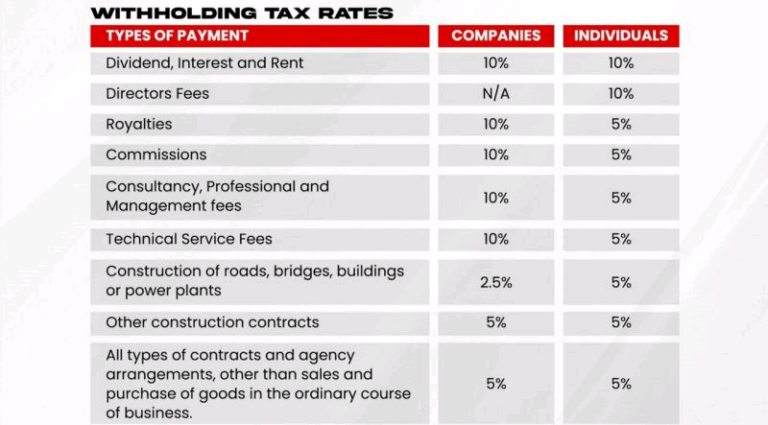
Withholding Tax (WHT)
This is an advance tax deducted from certain transactions such as contracts, rent, and professional services.
Penalty For Late Filing Of Company Income Tax In Nigeria
Under Nigerian tax laws, companies are expected to file annual tax returns within:
- Six months after the accounting year-end, or
- Eighteen months after incorporation for new companies
Failure to comply attracts penalties.
Current Penalty Structure
For Company Income Tax late filing:
- ₦25,000 penalty for the first month of default
- ₦5,000 for every additional month the failure continues
This penalty may continue accumulating until the company complies.
Example
Suppose a company fails to file tax returns for four months.
The penalty could become:
- First month = ₦25,000
- Additional three months = ₦15,000
Total: ₦40,000
This excludes any unpaid taxes or interest.
Penalty For Late Filing Of VAT Returns In Nigeria
VAT returns are expected monthly.
Businesses must file VAT returns on or before the 21st day of the following month.
For example:
- January VAT returns should be filed by February 21st.
VAT Late Filing Penalty
The penalty is:
- ₦50,000 for the first month
- ₦25,000 for every additional month
Even businesses with zero VAT transactions are often expected to file NIL returns.
Penalty For Late Remittance Of VAT
Apart from filing penalties, businesses may also face penalties for failing to remit collected VAT.
This may include:
- Interest charges
- Additional fines
- Enforcement actions by FIRS
In serious cases, authorities may investigate businesses suspected of tax evasion.
Penalty For Late Filing Of PAYE Returns
Employers are required to deduct PAYE from employee salaries and remit it to the relevant state tax authority.
Late filing or non-remittance can result in:
- Financial penalties
- Interest on unpaid tax
- Legal prosecution
Some states in Nigeria apply penalties based on:
- Amount owed
- Duration of default
- Number of employees affected
Penalty For Late Filing Of Personal Income Tax
Individuals such as:
- Freelancers
- Consultants
- Entrepreneurs
- Sole proprietors
must also file annual income tax returns.
Failure to comply may result in:
- Monetary fines
- Tax investigations
- Legal enforcement
State tax authorities may also impose interest on unpaid liabilities.
What Happens If You Ignore Tax Filing Completely?
Many small business owners assume tax authorities will not notice late filings. However, Nigerian tax enforcement has become stricter in recent years.
Ignoring tax obligations may lead to serious consequences.
Accumulating Penalties
The longer the delay, the higher the penalties.
Monthly charges continue accumulating until compliance is achieved.
Interest On Unpaid Taxes
Apart from fixed penalties, interest may also be charged on unpaid amounts.
This increases the total liability significantly over time.
Difficulty Obtaining Tax Clearance Certificate
A Tax Clearance Certificate (TCC) is important for:
- Government contracts
- Visa applications
- Bank transactions
- Loan approvals
- Business licensing
Without proper tax compliance, obtaining a TCC becomes difficult.
Legal Action
Tax authorities can initiate legal proceedings against persistent defaulters.
In severe cases, businesses may face:
- Court actions
- Asset seizure
- Account restrictions
Damage To Business Reputation
Non-compliance can reduce trust among:
- Investors
- Customers
- Financial institutions
- Business partners
Why Many Nigerians File Taxes Late
Several reasons contribute to late tax filing in Nigeria.
Lack Of Awareness
Many people simply do not understand:
- Filing deadlines
- Tax obligations
- Applicable taxes
- Poor Record Keeping
Without accurate financial records, preparing returns becomes difficult.
Cash Flow Problems
Some businesses delay filing because they cannot pay the tax immediately.
However, failing to file usually worsens the situation because penalties increase.
Fear Of Tax Complexity
Tax regulations can appear complicated, especially for small business owners.
This is why many businesses hire accountants or tax consultants.
How To Avoid Late Filing Penalties In Nigeria
Avoiding penalties is usually easier and cheaper than resolving them later.
Know Your Filing Deadlines
Mark important dates such as:
- Monthly VAT deadlines
- Annual company tax filing dates
- PAYE remittance schedules
Using reminders can help prevent missed deadlines.
Maintain Proper Financial Records
Keep records of:
- Sales
- Expenses
- Salaries
- Receipts
- Bank statements
Good bookkeeping simplifies tax filing.
File NIL Returns When Necessary
If your business made no income during a period, you may still need to file NIL returns.
Many businesses receive penalties simply because they failed to submit zero-activity returns.
Hire A Tax Professional
An accountant or tax consultant can help:
- Calculate taxes accurately
- Meet deadlines
- Avoid costly mistakes
This is especially important for growing businesses.
Use FIRS Online Platforms
Nigeria now has digital tax systems that make filing easier.
Online filing reduces:
- Delays
- Human errors
- Missed submissions
Can FIRS Waive Tax Penalties?
In some situations, tax authorities may consider:
- Penalty reductions
- Waivers
- Settlement arrangements
This usually depends on:
- The reason for default
- Cooperation from the taxpayer
- Prompt corrective action
However, waivers are not guaranteed.
Businesses should avoid relying on penalty forgiveness.
How To Regularize Outstanding Tax Returns
If your tax returns are already overdue, taking action quickly is important.
Step 1: Gather Financial Records
Collect:
- Invoices
- Receipts
- Salary records
- Bank statements
- Previous tax documents
Step 2: Calculate Outstanding Taxes
Determine:
- Unpaid taxes
- Applicable penalties
- Interest charges
Step 3: Submit Outstanding Returns
File all pending returns immediately.
Delaying further may increase liabilities.
Step 4: Negotiate If Necessary
In some cases, tax authorities may allow payment plans.
Professional guidance may help during negotiations.
Common Mistakes That Lead To Tax Penalties
Missing Monthly VAT Deadlines
Many businesses focus only on annual taxes and forget monthly VAT obligations.
Failure To Register Properly
Some businesses begin operations without proper tax registration.
Ignoring Tax Emails And Notices
Official notices should never be ignored.
Responding early may reduce complications.
Mixing Personal And Business Finances
This makes accurate accounting difficult and may lead to filing errors.
Small Business Tax Compliance Tips
Small businesses can improve compliance by:
- Opening separate business bank accounts
- Using accounting software
- Keeping digital records
- Setting aside money for taxes monthly
- Consulting professionals when uncertain
Good compliance habits help businesses grow sustainably.
The Role Of FIRS In Tax Enforcement
The Federal Inland Revenue Service is responsible for:
- Tax collection
- Enforcement
- Audits
- Compliance monitoring
FIRS has improved digital monitoring systems in recent years, making it easier to identify non-compliant businesses.
As a result, businesses should take tax compliance seriously.
Frequently Asked Questions – FAQs
What Is The Penalty For Late Filing Of Company Tax In Nigeria?
The standard penalty is:
- ₦25,000 for the first month
- ₦5,000 for each additional month
What is The VAT Late Filing Penalty In Nigeria?
The penalty is:
- ₦50,000 for the first month
- ₦25,000 for every additional month
Can A Company Be Penalized Even Without Profit?
Yes.
Some filing obligations still apply even if the company made no profit.
Is Filing Tax Returns Compulsory In Nigeria?
Yes.
Individuals and businesses meeting taxable conditions are legally required to comply.
Can Tax Penalties Be Removed?
Sometimes tax authorities may grant waivers or reductions, but this is not automatic.